Signals
GPT-6.1 Sol Ultrafast Makes Speed a Request Flag, Not a Model Swap
Published October 15, 2026Update Released Oct 8, 2026
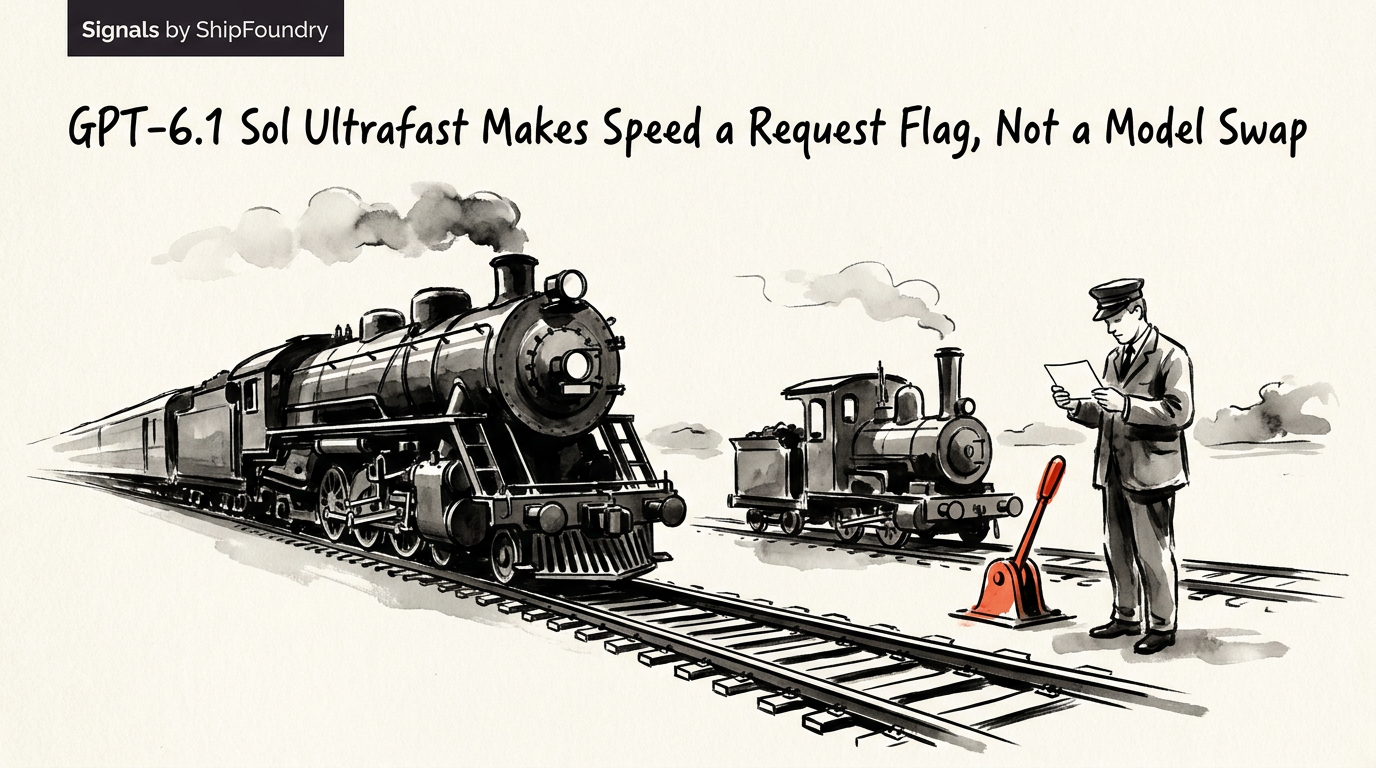
Until now, agent builders who needed faster streaming usually routed latency-sensitive turns to a smaller, weaker model. With GPT-6.1 Sol Ultrafast, speed becomes a per-request setting on the frontier model itself, so you can keep the stronger model on the turns users watch.
What Changed
- Speed used to be a model choice. Now it is a request flag: set service_tier to "ultrafast" on GPT-6.1 Sol in the Responses API and the same model streams with less time between output tokens.
- That means a router can pick quality first (GPT-6.1 Sol) and then pick speed per call, instead of trading one for the other by swapping to a smaller model.
- It is open to all API users subject to rate limits, with global and US/EU data residency. Pricing for the tier is published separately and should be checked before you default to it.
Who Should Care
- Agent builders who route user-facing turns to a small fast model today and accept worse answers to keep the stream snappy.
- Teams running GPT-6.1 Sol in interactive coding, support, or voice agents where users watch tokens arrive.
- Anyone maintaining a model router who wants one fewer model in the fallback chain.
Who Should Not Care
- Batch and background agents where nobody watches the stream; inter-token speed buys you nothing there.
- Teams whose bottleneck is time to first token or tool latency, which this tier does not claim to fix.
- Cost-capped workloads that already run well on a cheap small model and gain nothing from a frontier one.
The Verdict
If you downgrade models only to make streams feel fast, test GPT-6.1 Sol with service_tier "ultrafast" on your interactive turns before your next routing change. Keep small models for cost, not for speed. Confirm the tier price and your rate limits first.
Take This To Your Agent
Copy a ready-to-paste investigation handoff that asks your coding agent to check this update against your product and recommend what to do next.