Signals
The Stack Changes That Matter
Clear verdicts on platform, framework, and tooling updates: what changed, who benefits, and what to ignore.
Oct 19, 2026
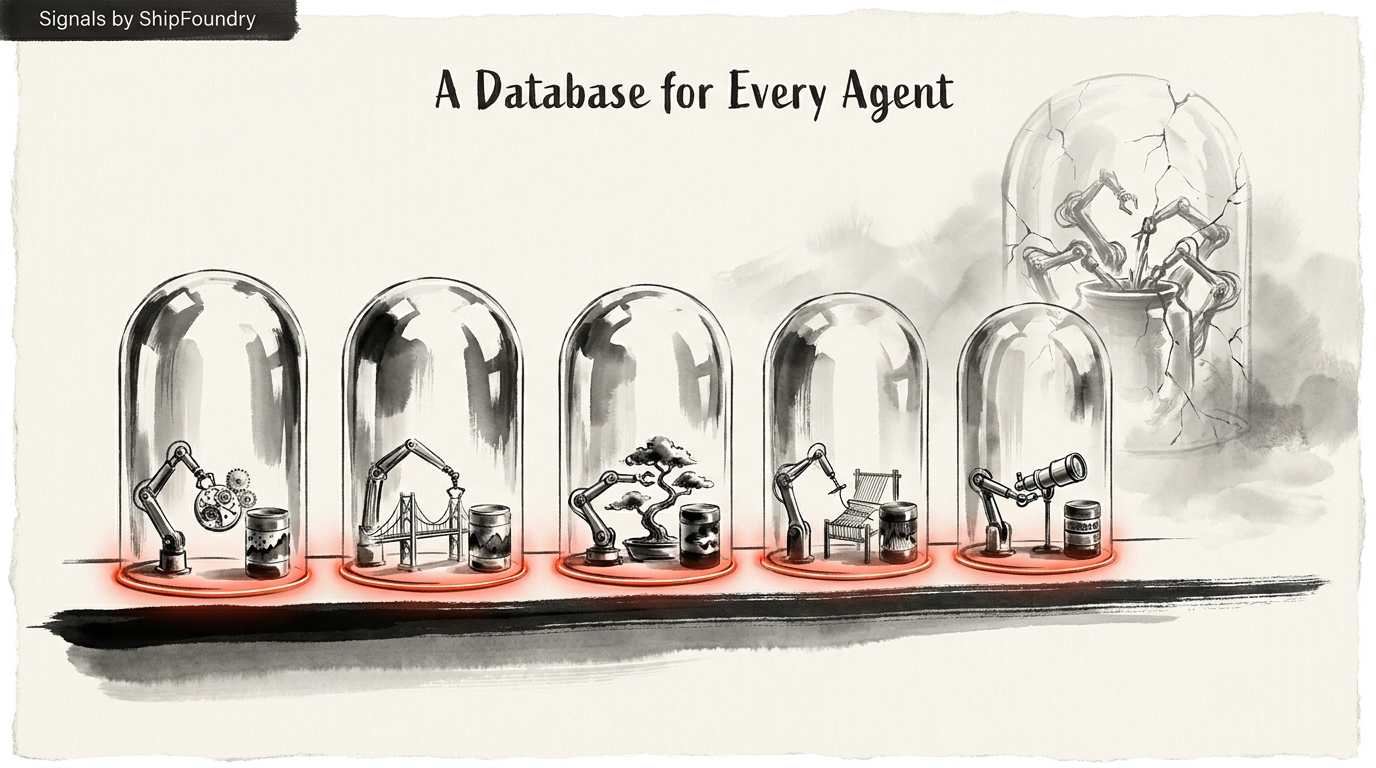
Supabase Gives Every Coding Agent Its Own Local Database
Parallel coding agents have always shared the one thing they could not safely share: the local database. Supabase CLI v2.119.0 gives every git worktree its own isolated local project with auto-assigned ports, plus a native runtime that skips Docker in CI and agent sandboxes. Experimental, but it removes the biggest collision point in multi-agent work.
Read The Signal

Oct 15, 2026
Next.js 16.4 Lets You Fail the Build When a Static Route Goes Dynamic
Next.js 16.4 adds ensureStatic, a route-level guarantee that fails the build when a page meant to be static pulls dynamic work into its shell. Teams shipping agent dashboards and marketing surfaces on the App Router can now enforce fast first paint instead of hoping for it.
Read The Signal
Oct 15, 2026
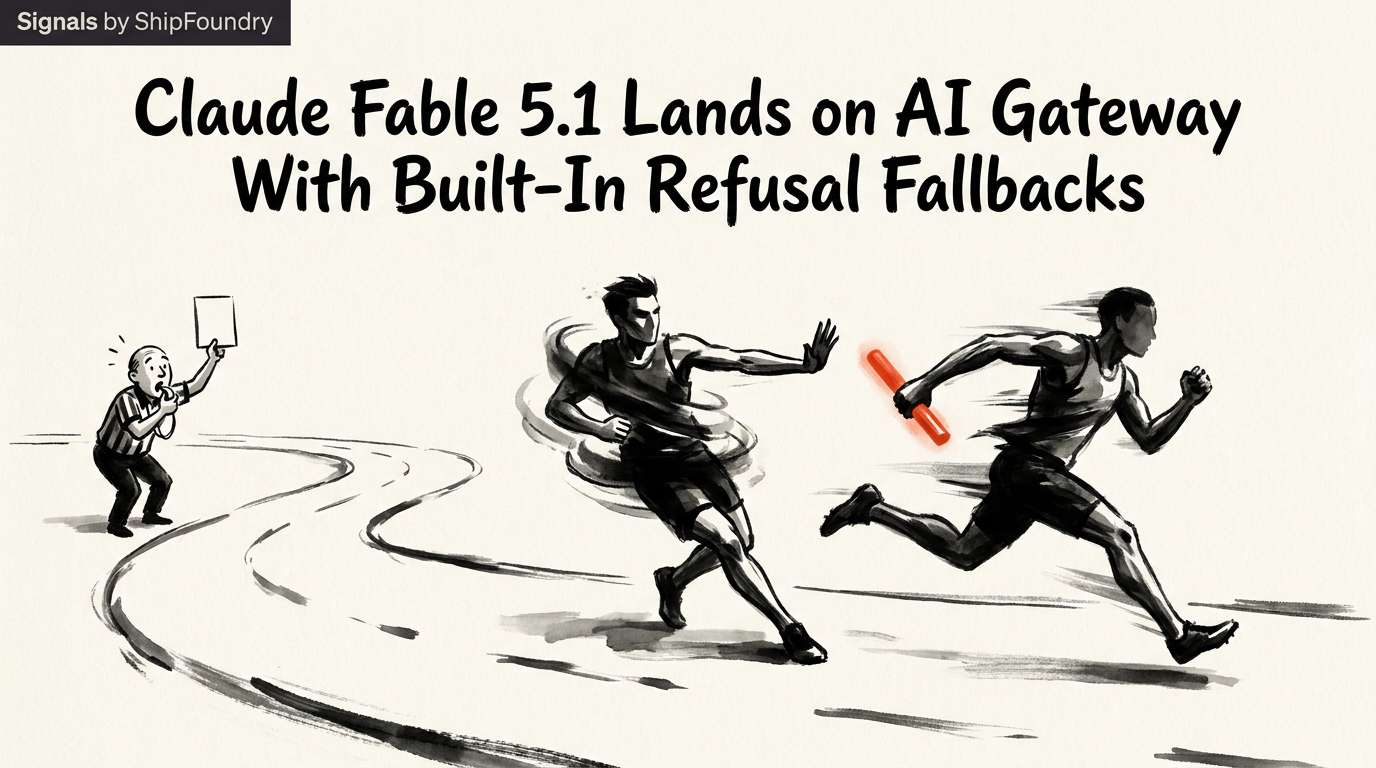
Claude Fable 5.1 Lands on AI Gateway With Built-In Refusal Fallbacks
Agent builders on Vercel AI Gateway can now route long-horizon coding and research runs to Claude Fable 5.1 and fall back to Opus 5 or Sonnet 5 automatically when it refuses. Trial it on your longest agent loops, but note there is no zero data retention.
Read The Signal
Oct 15, 2026
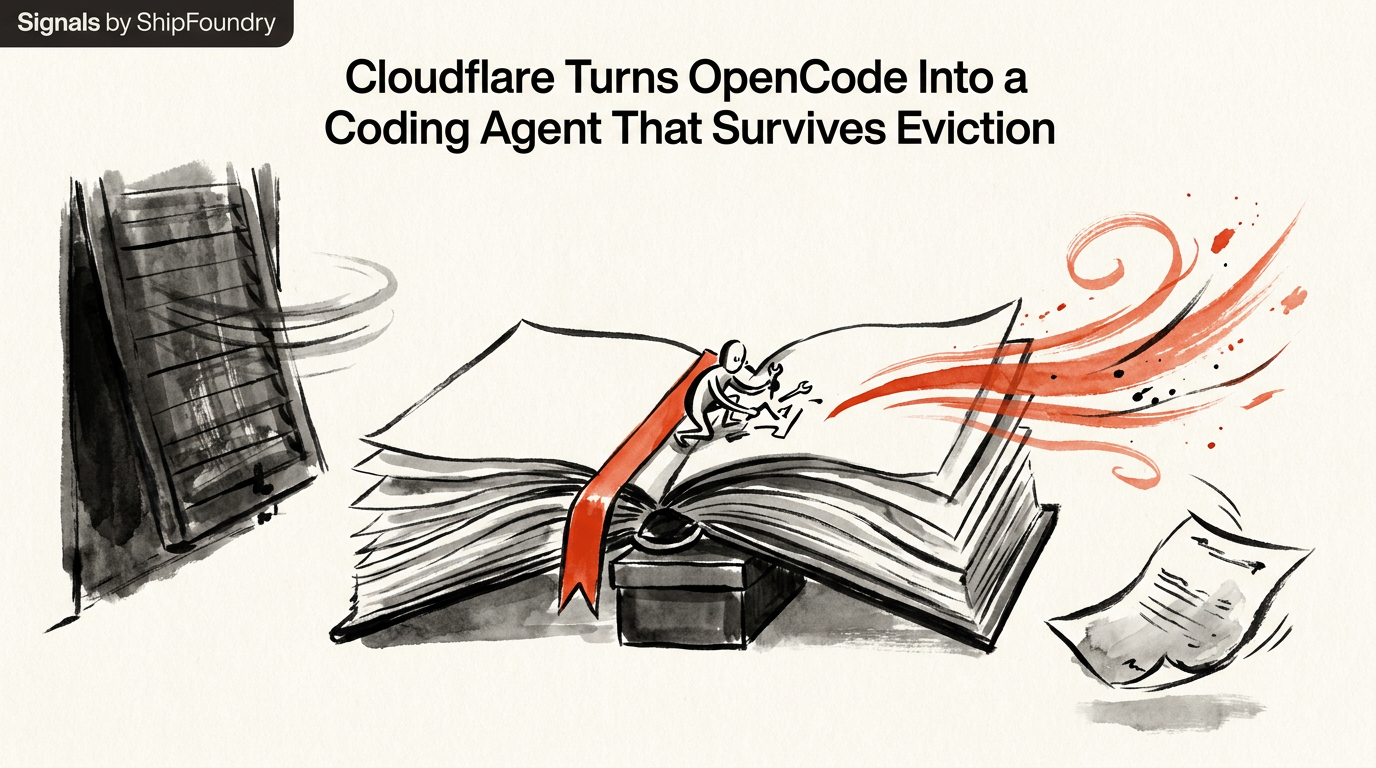
Cloudflare Turns OpenCode Into a Coding Agent That Survives Eviction
Before, hosting a long-running coding agent on serverless meant building your own session storage and crash recovery. Cloudflare's experimental OpenCodeHarness runs OpenCode 2.0 inside a single Durable Object that saves sessions and wakes interrupted work on its own, so a hosted coding agent is now a small amount of Worker code.
Read The Signal
Oct 15, 2026
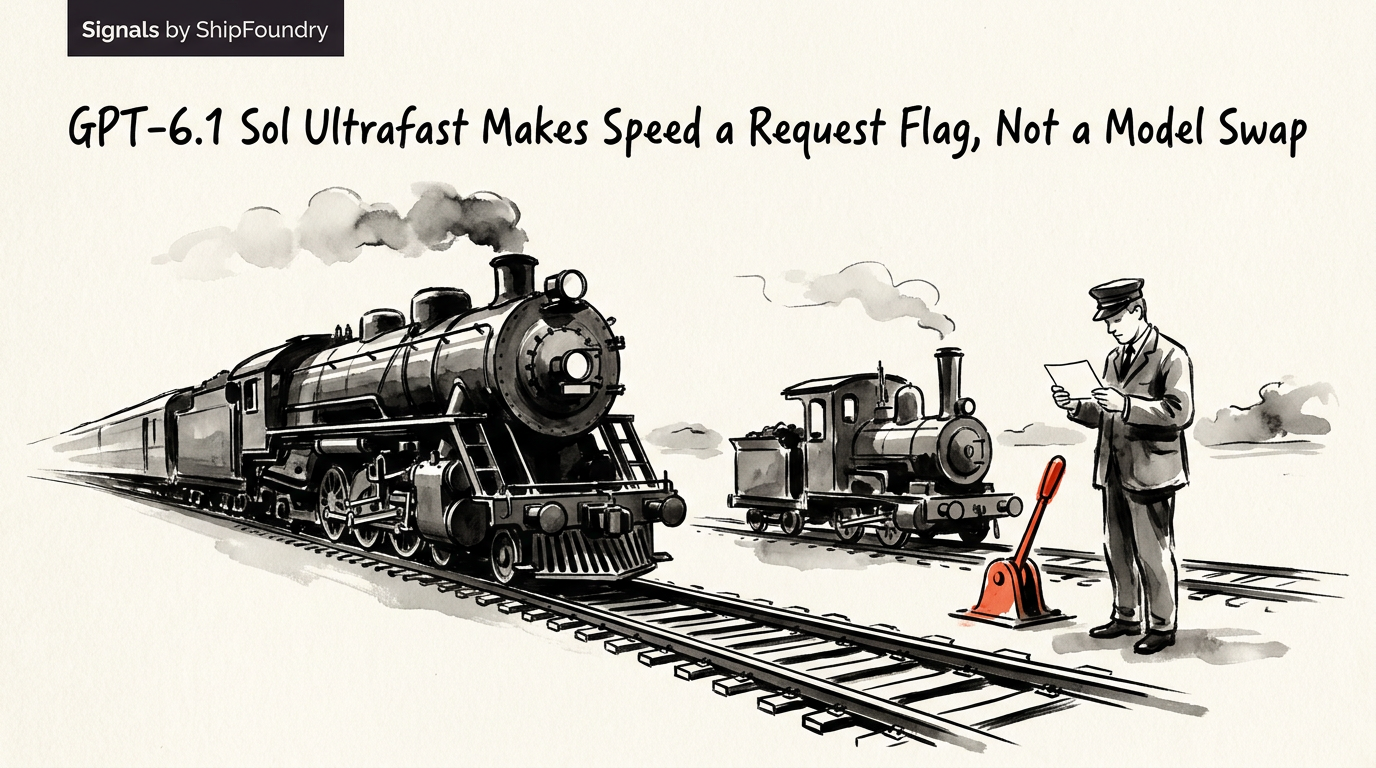
GPT-6.1 Sol Ultrafast Makes Speed a Request Flag, Not a Model Swap
Until now, agent builders who needed faster streaming usually routed latency-sensitive turns to a smaller, weaker model. With GPT-6.1 Sol Ultrafast, speed becomes a per-request setting on the frontier model itself, so you can keep the stronger model on the turns users watch.
Read The Signal
Oct 15, 2026
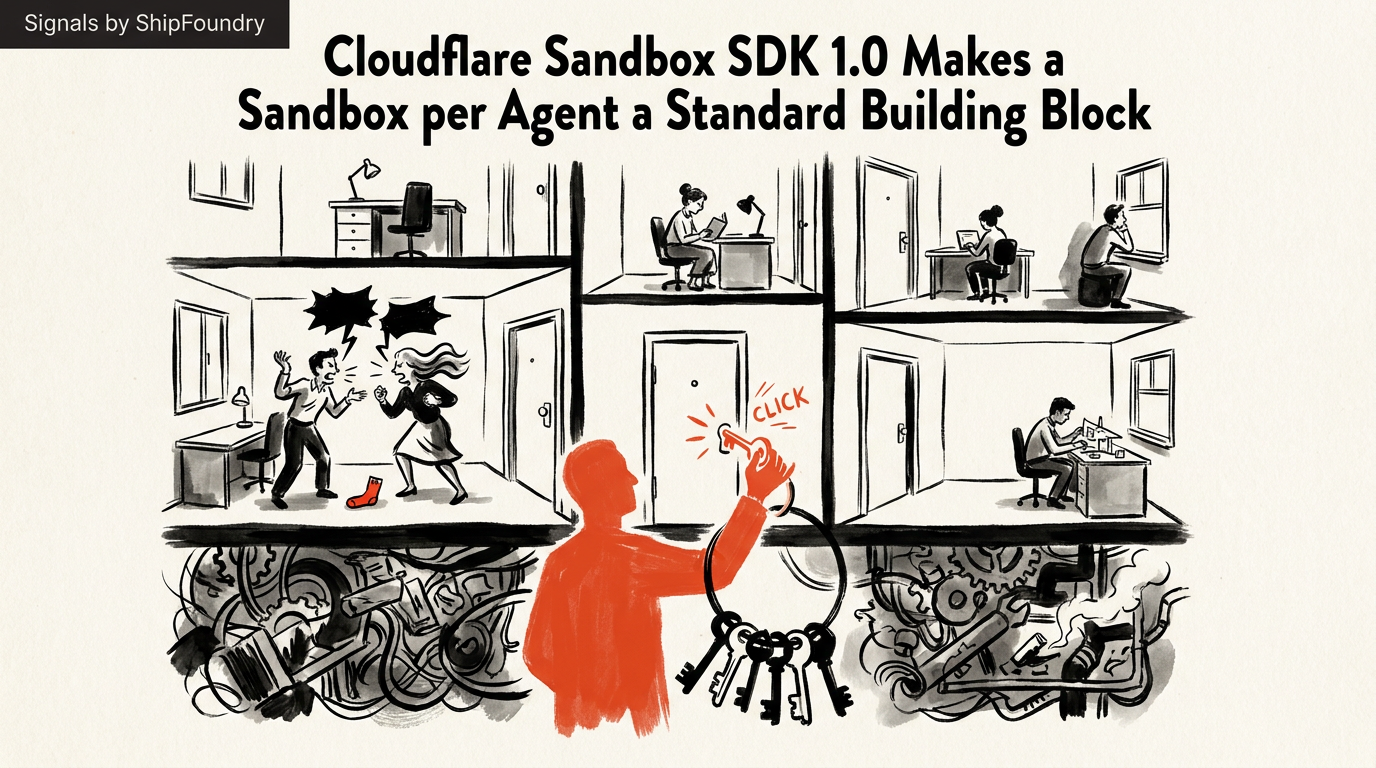
Cloudflare Sandbox SDK 1.0 Gives Every Agent Its Own Sandbox
Isolated, persistent compute for each agent is now a standard building block, not infrastructure you build yourself. Cloudflare Sandbox SDK 1.0 lets each agent own its sandbox through a Durable Object, and Upstash shipped the same one sandbox per agent pattern. If you run agents in parallel, stop rolling your own isolation.
Read The Signal
Oct 15, 2026
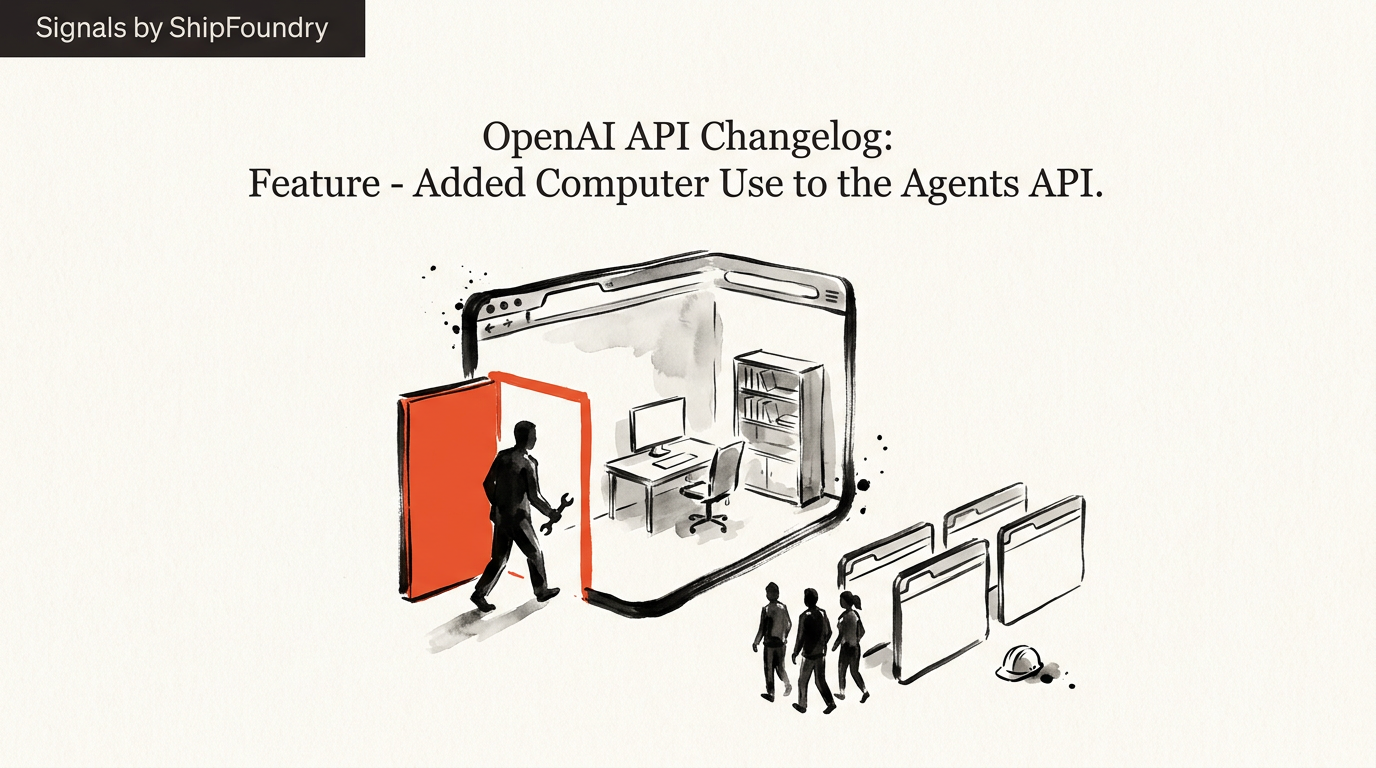
OpenAI Agents API Now Drives a Hosted Browser for You
Agents built on the OpenAI Agents API can now operate websites without APIs inside an OpenAI-hosted browser. You no longer have to run your own browser fleet to let an agent click through a legacy portal; your app still owns approvals and sign-in.
Read The Signal
Aug 24, 2026
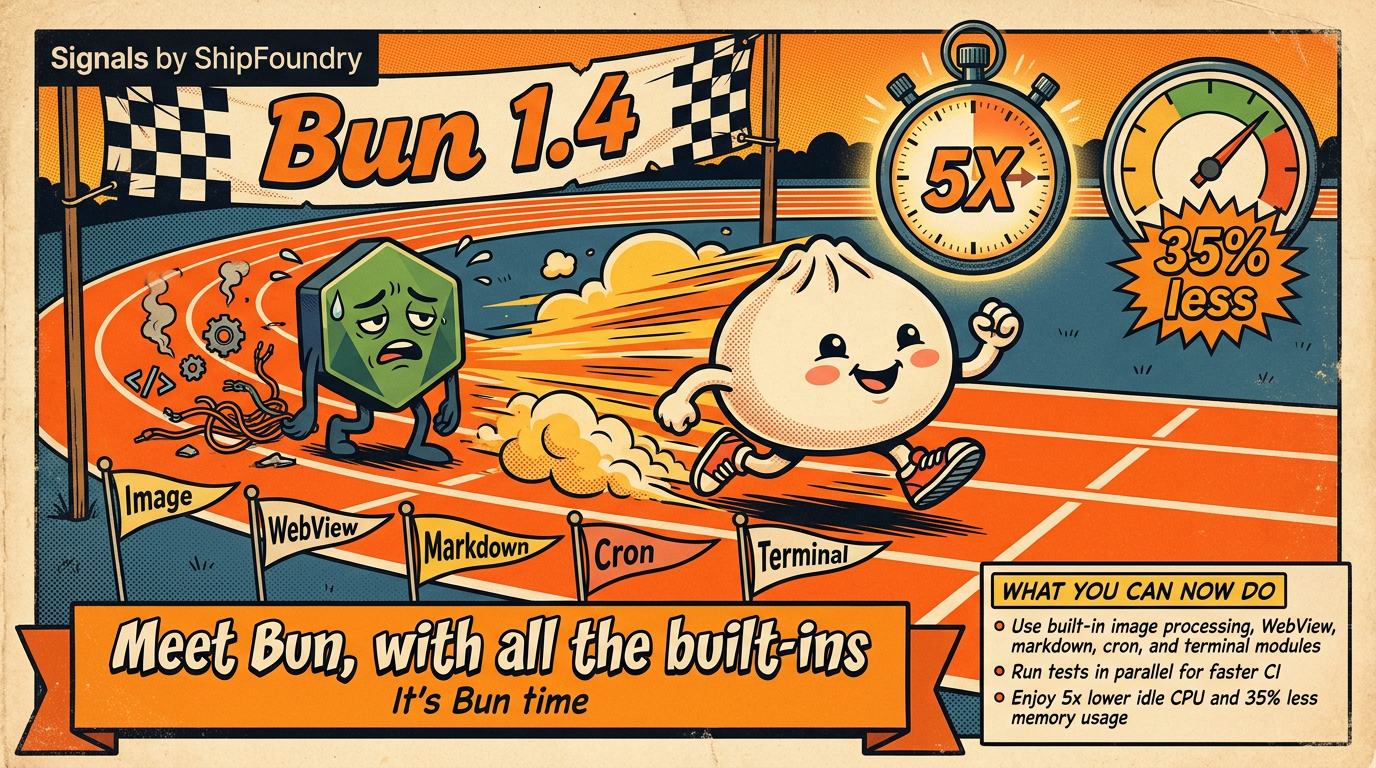
Bun 1.4 Rewrites the Runtime in Rust: 5× Lower Idle CPU and Up to 35% Less Memory
Bun 1.4 rewrites its runtime core from Zig to Rust. Bun reports 5× lower idle CPU, up to 35% lower memory use, and 50% faster Linux startup, with workload-specific gains including lower Claude Code CPU. Existing Bun users should upgrade on a branch and measure their real CI, agent, or server workload; stable Node teams do not need to migrate.
Read The Signal
Aug 19, 2026
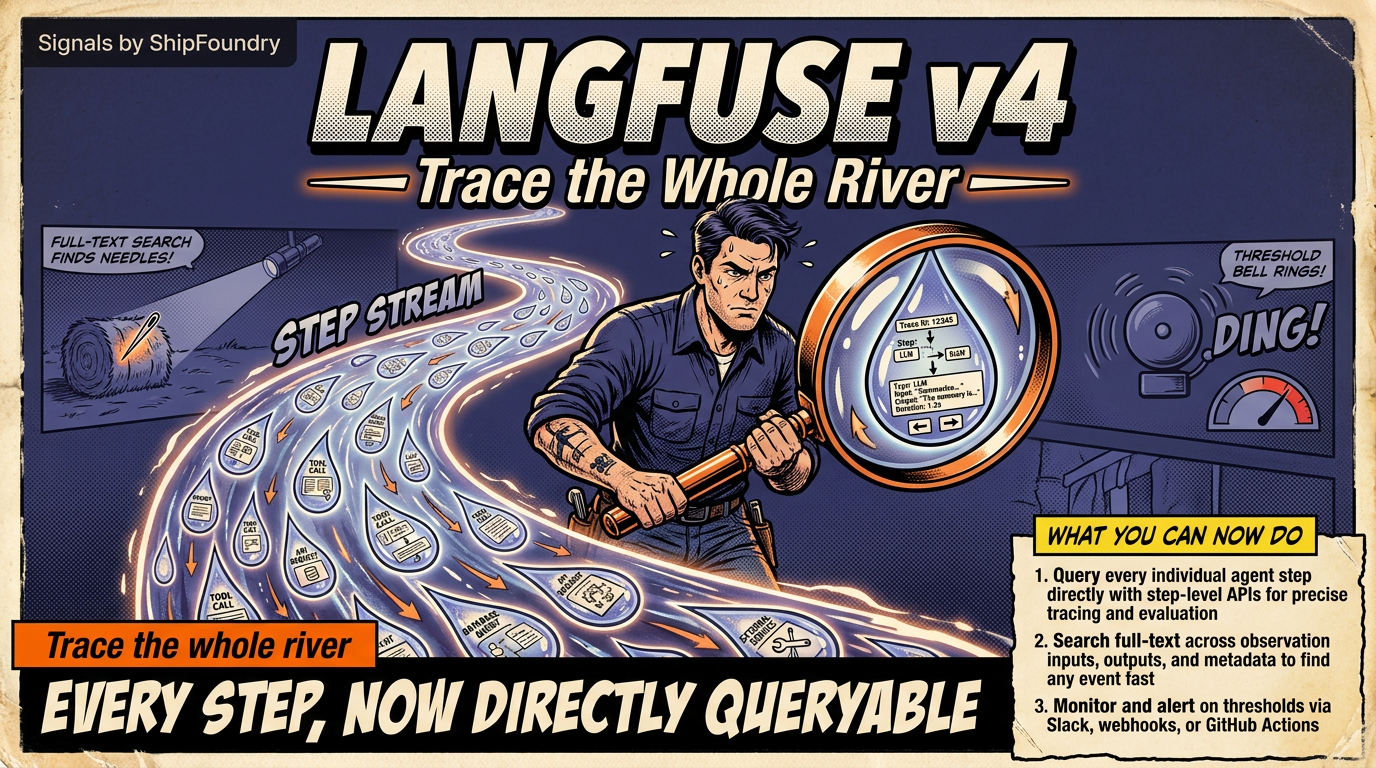
Langfuse v4 Makes Every Agent Step Directly Queryable
Langfuse v4 replaces read-time trace joins with one append-only observations table, adds step-level APIs, search, monitors, and code evaluators, and reports 10x+ faster long-range dashboards on large projects. Cloud becomes v4-only November 16, 2026.
Read The Signal
Aug 17, 2026
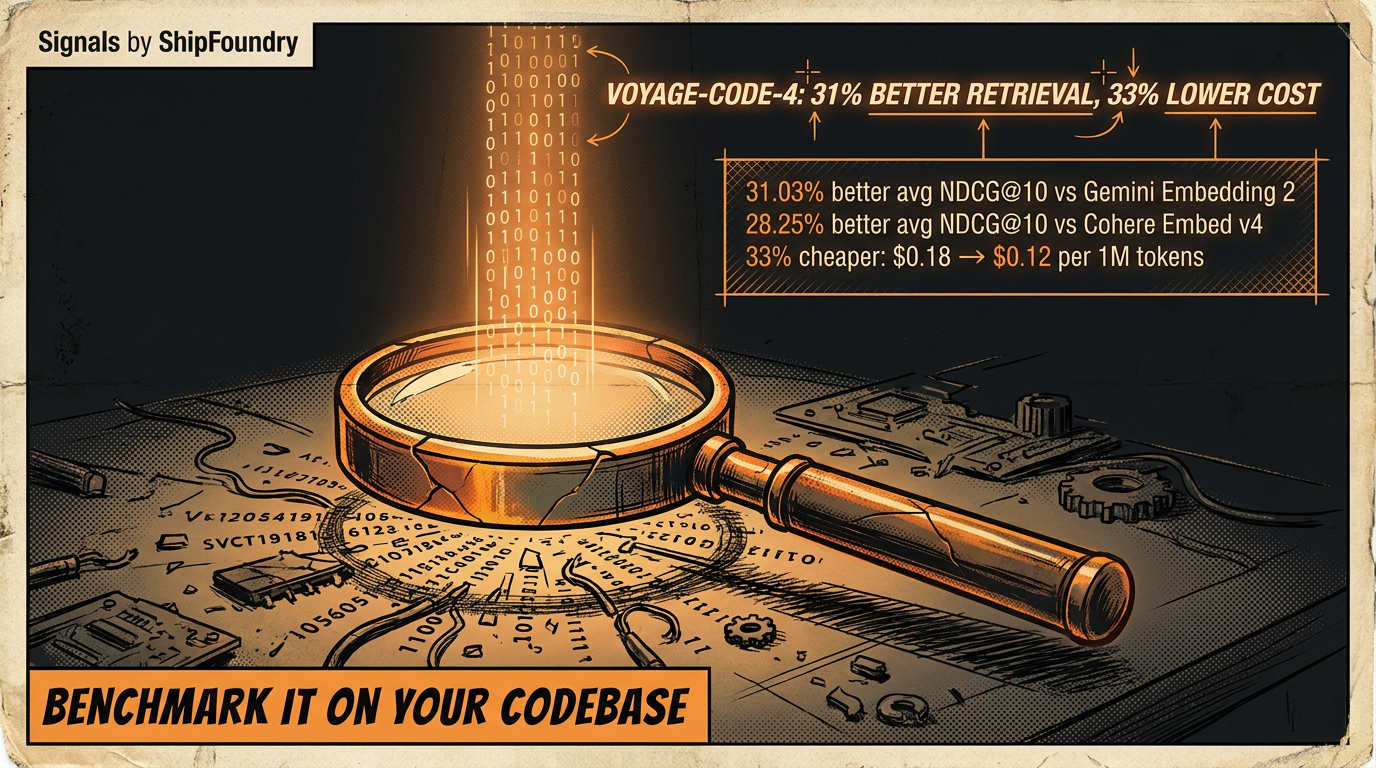
Voyage Code 4: Better Retrieval for AI Coding Agents
Voyage AI released voyage-code-4, a new embedding model that improves code retrieval for AI agents, 28-31% better NDCG@10 than top competitors on agentic benchmarks, with a 33% price cut. Added Matryoshka dimensions and MongoDB Atlas integration make it easier to adopt. But test it against your own codebase first.
Read The Signal
Aug 16, 2026
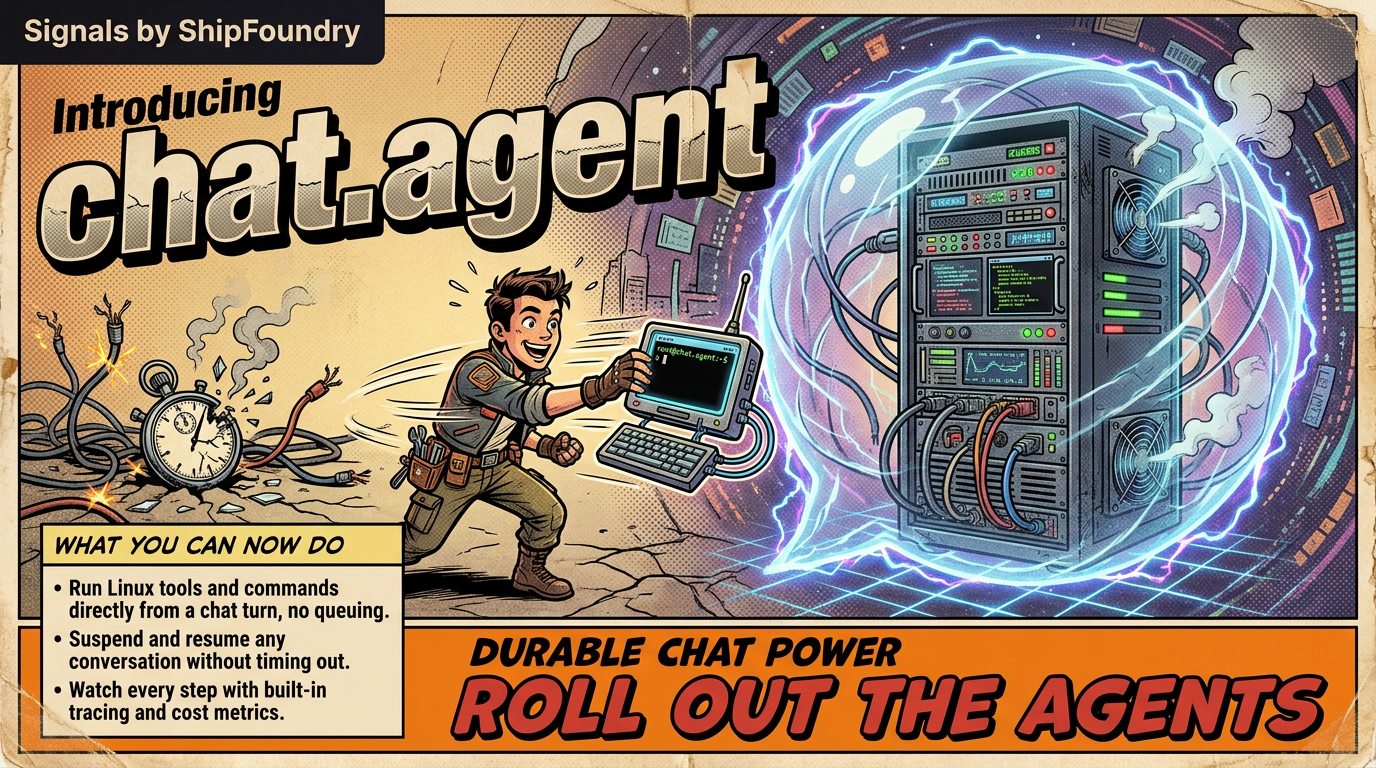
Trigger.dev Gives Every Chat Its Own Durable Linux Machine
Trigger.dev's chat.agent gives every conversation its own stateful Linux machine that can run without request timeouts, sleep between turns, and keep streaming through refreshes and crashes. It plugs into AI SDK's useChat without the usual API-route and stream plumbing. The tradeoff is adopting Trigger.dev's runtime and paying only for compute used.
Read The Signal
Aug 4, 2026
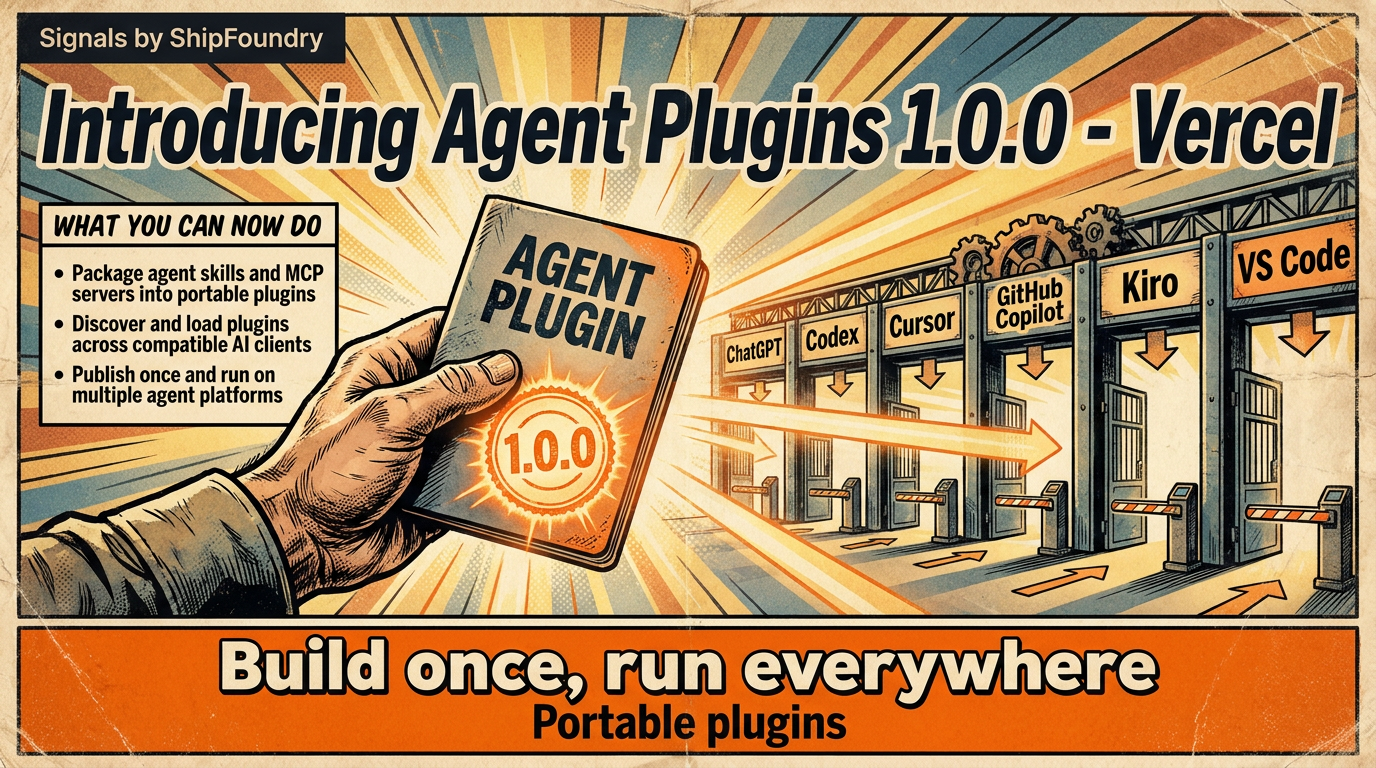
Agent Plugins 1.0.0: a Portable Plugin Standard That Actually Spans Clients
Vercel shipped Agent Plugins 1.0.0, an open spec for packaging Agent Skills and MCP servers into portable plugins with a common manifest. Launch clients include ChatGPT, Codex, Cursor, GitHub Copilot, Kiro, and VS Code, so a single plugin can ship everywhere. Real cross-client unlock if you build or distribute agent tooling; noise if you are single-client.
Read The Signal
Aug 3, 2026
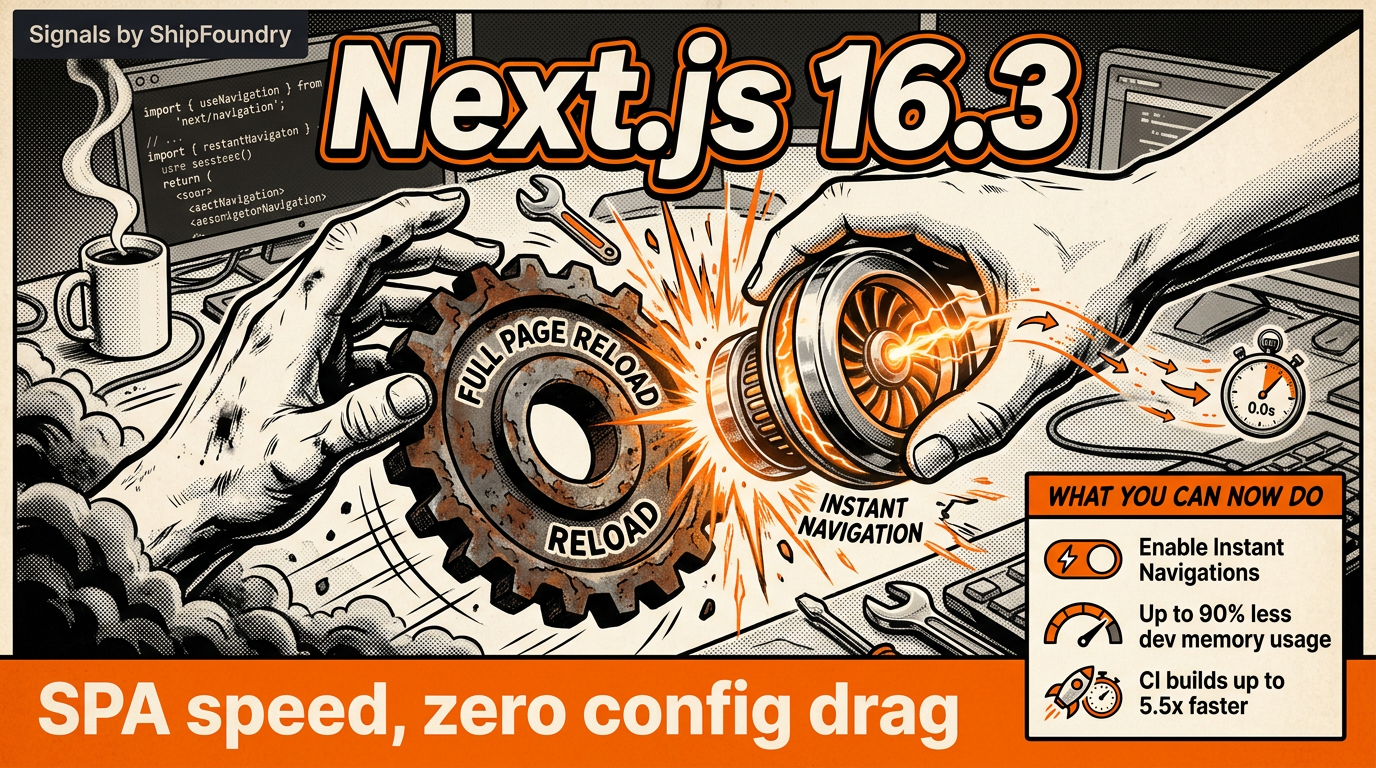
Next.js 16.3: Instant Navigations and a Faster Dev Loop
Next.js 16.3 ships Instant Navigations for SPA-like responsiveness, plus big zero-code performance wins: up to 90% less dev memory, 5.5x faster builds, and 22% more SSR requests. AI agent tooling gets versioned docs. Real unlock for most Next.js teams, but the nav features are opt-in and require migration effort.
Read The Signal
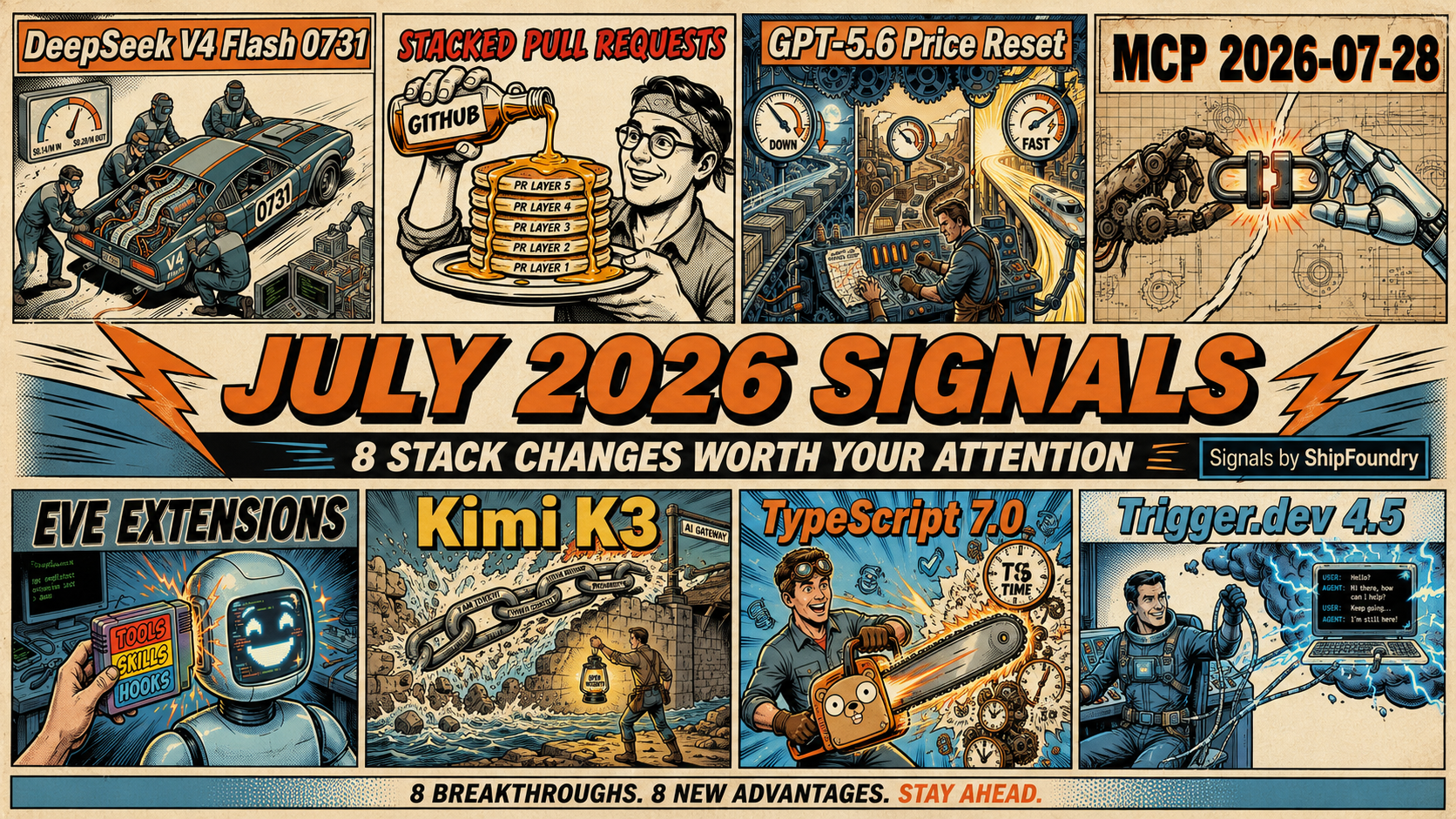
Jul 31, 2026
July 2026 Signals: 8 Stack Changes Worth Your Attention
July reset the economics and infrastructure of agentic engineering. These eight updates are the ones worth understanding before you decide what to adopt next.
Read The Recap
Jul 31, 2026
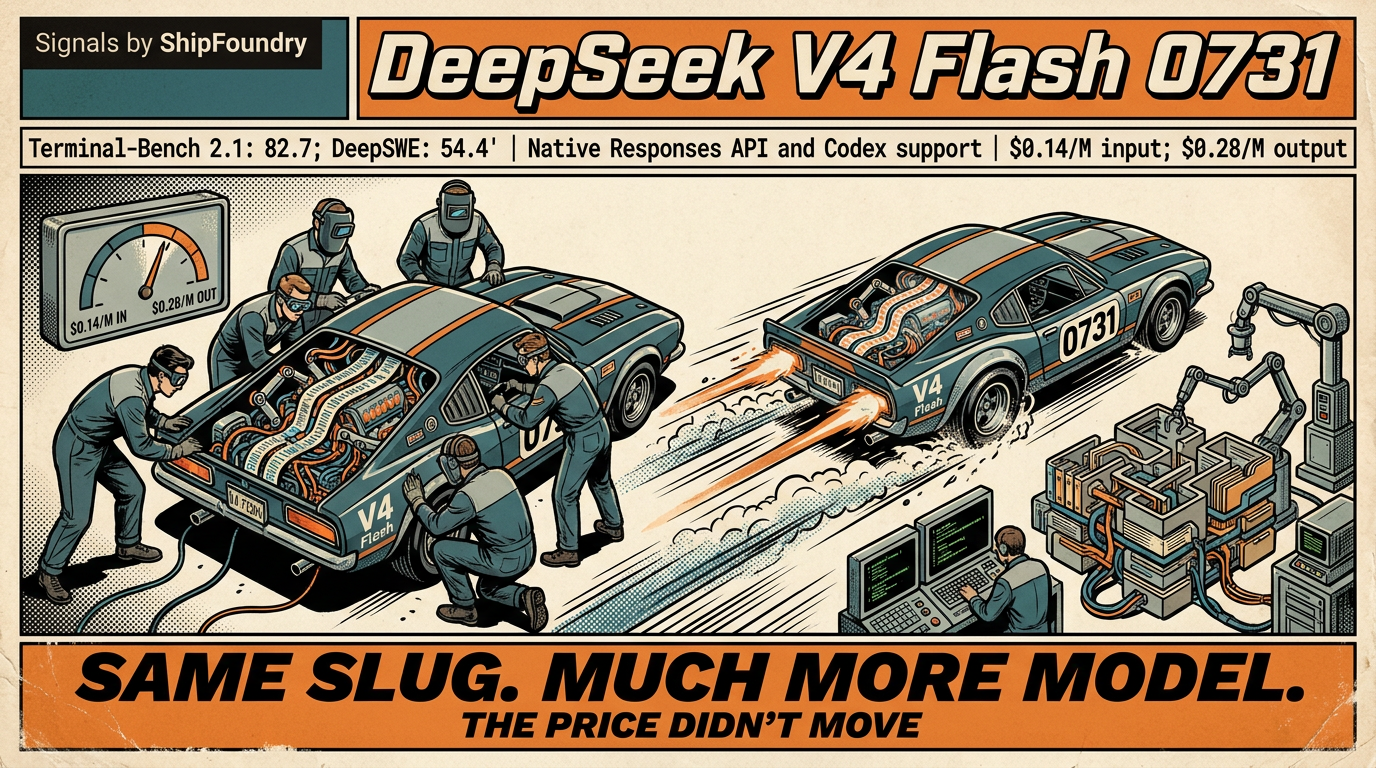
DeepSeek Gave V4 Flash a Major Agent Upgrade Without Raising Its Price
DeepSeek re-post-trained V4 Flash and replaced the model behind the existing deepseek-v4-flash API slug with a much stronger agent-focused version. Its vendor-reported agent results jumped, native Responses API and Codex support arrived, and the price stayed at $0.14 per million cache-miss input tokens and $0.28 per million output tokens.
Read The Signal
Jul 30, 2026
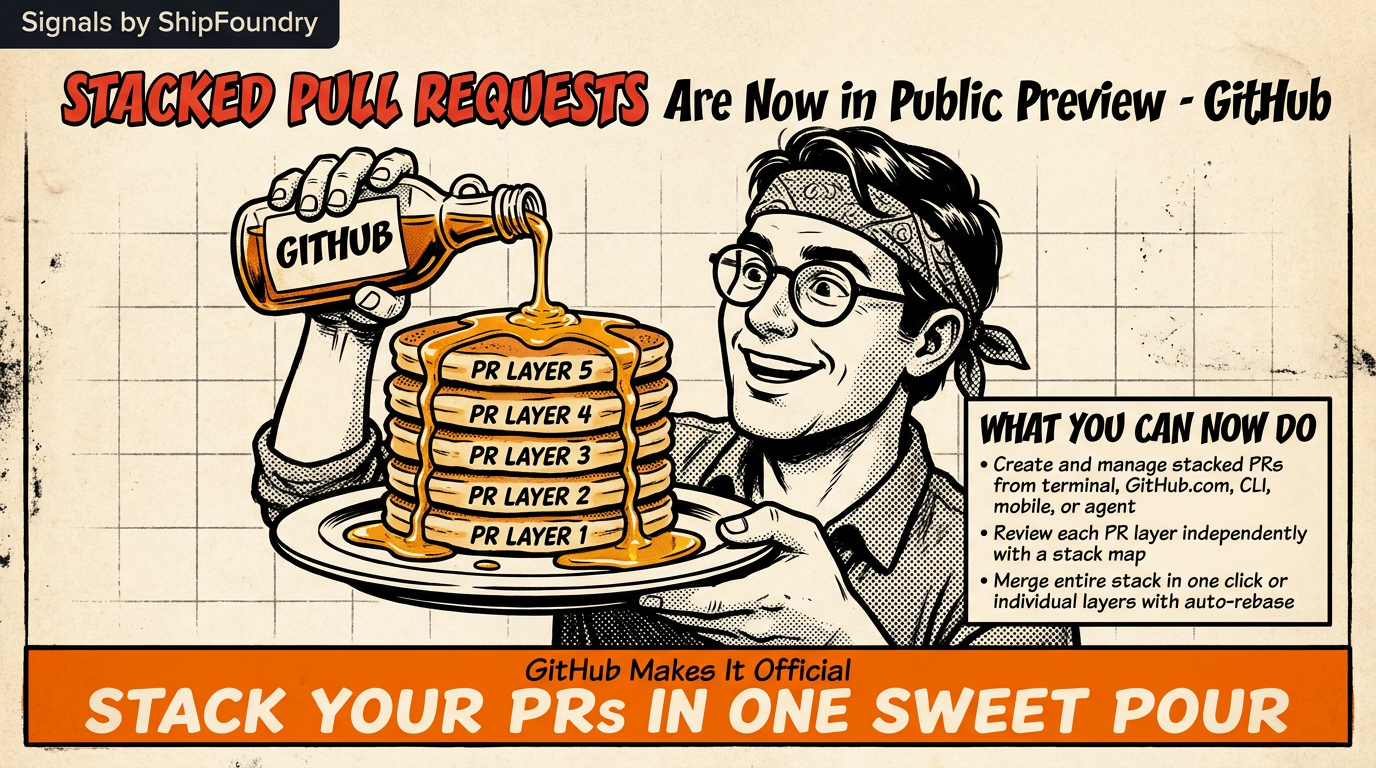
GitHub Stacked Pull Requests Are in Public Preview
GitHub now ships native stacked PRs so you can break large changes into reviewable layers and merge them in one click. This is a real unlock for teams drowning in big PRs or AI-generated code, but it is irrelevant for anyone with a simple linear workflow.
Read The Signal
Jul 29, 2026
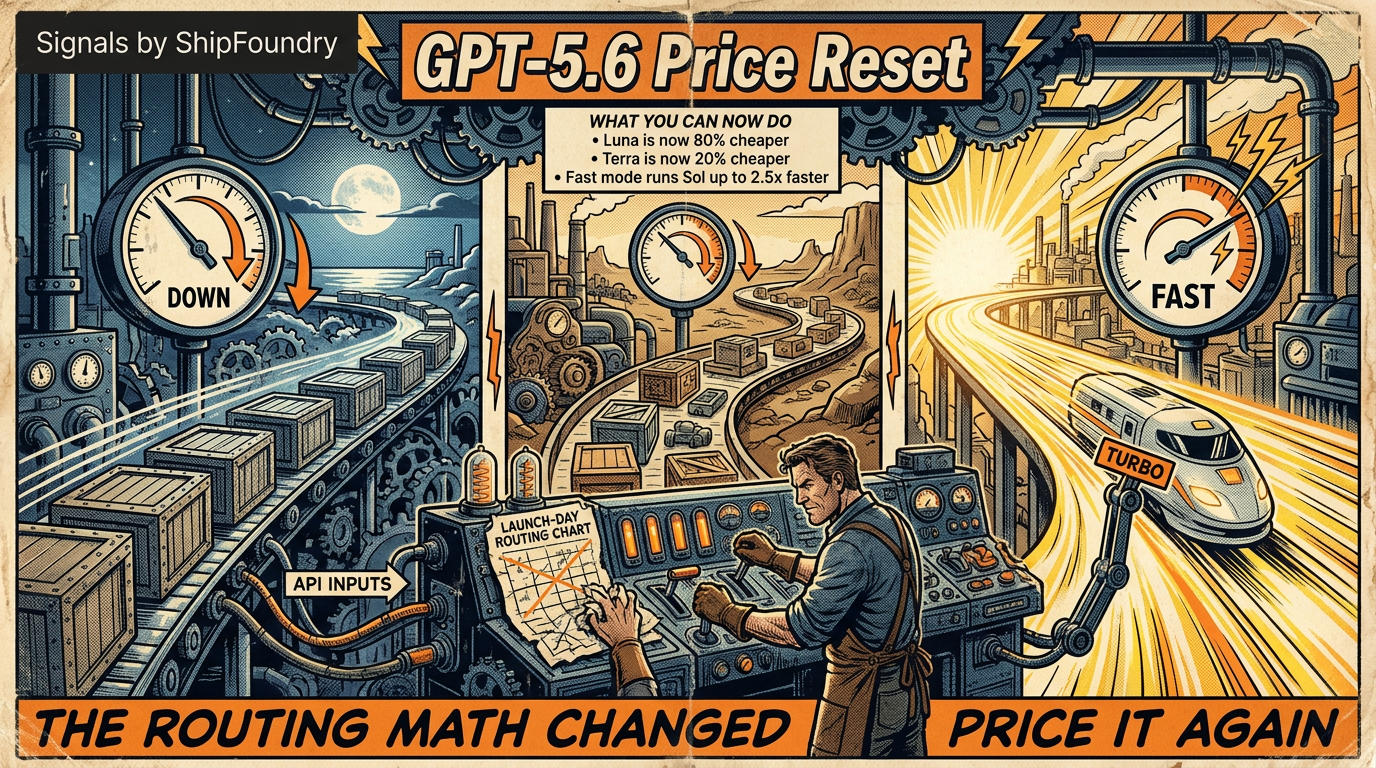
OpenAI Cut Luna's Price 80% Three Weeks After GPT-5.6 Shipped
GPT-5.6 landed on July 9, but the bigger API story came July 30: OpenAI cut Luna's price 80%, cut Terra's price 20%, and replaced Priority Processing with Fast mode. Any routing or cost decision made at launch deserves a fresh look.
Read The Signal
Jul 28, 2026
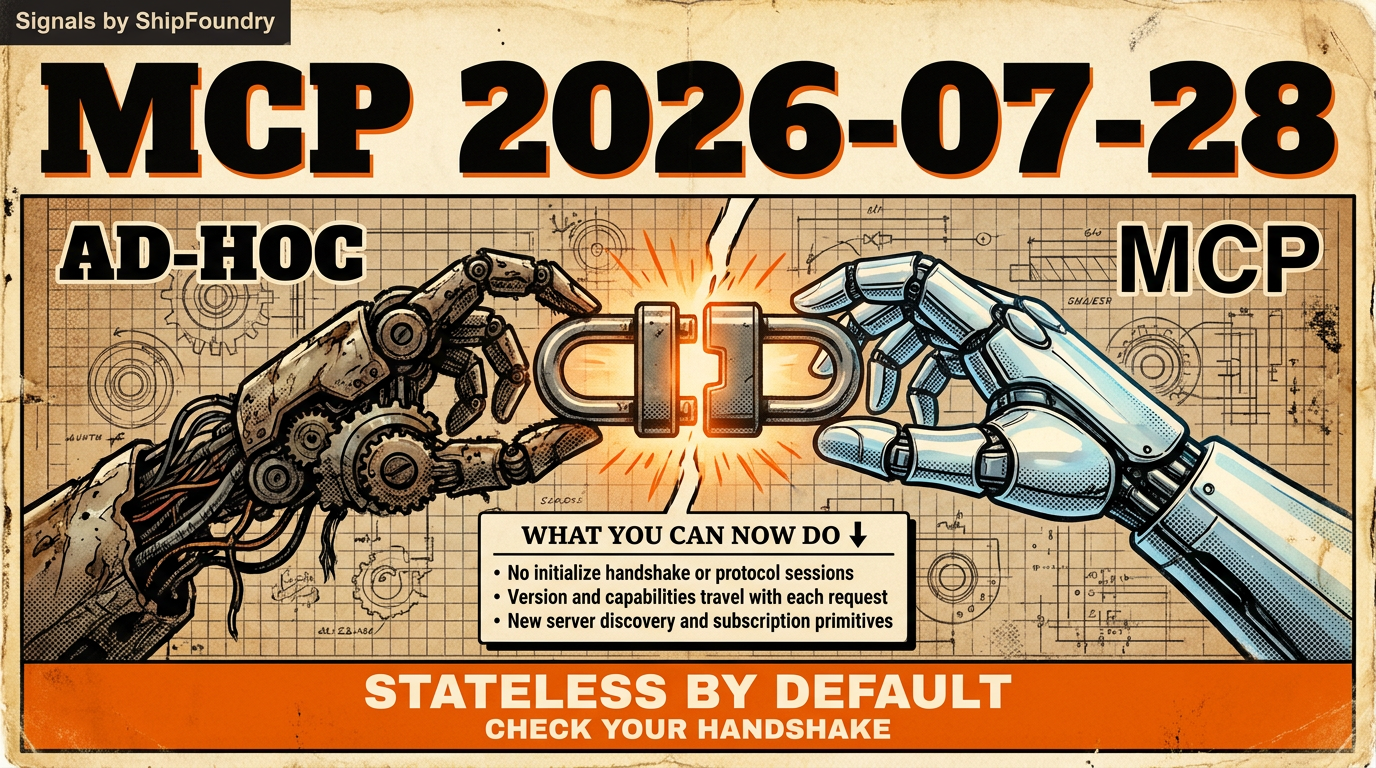
MCP Removes Protocol Sessions and Changes How Clients Connect
MCP's 2026-07-28 stable revision removes protocol sessions and the initialize handshake, then moves version and capability context onto every request. That can simplify horizontally scaled services, but it is a compatibility migration for clients, servers, and SDKs built around the previous lifecycle.
Read The Signal
Jul 22, 2026
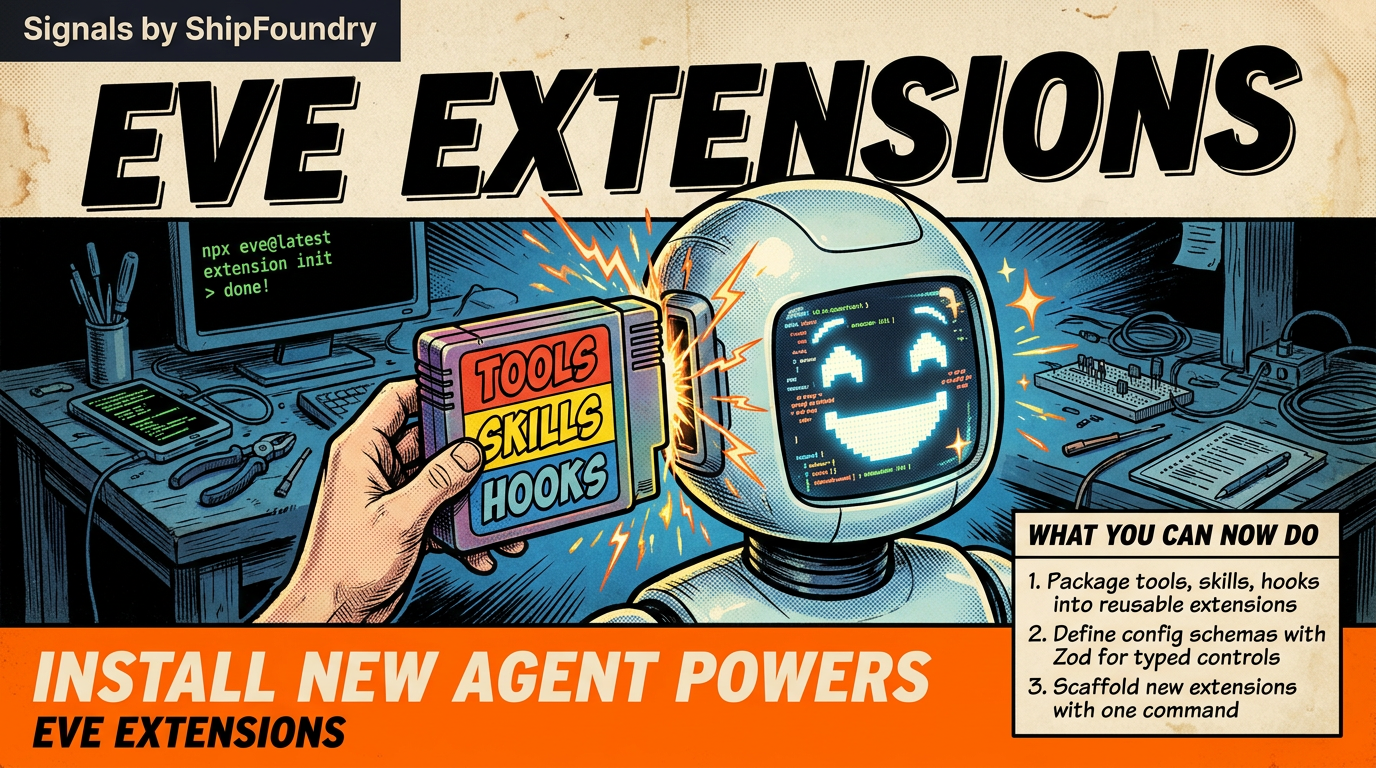
Vercel Eve Extensions: Package Manager for Agent Capabilities
You can now package Eve agent tools, skills, and hooks as installable, versioned extensions and manage them like dependencies. If you build agents on Vercel's Eve platform, this is a real workflow unlock. If you do not use Eve, this does not matter.
Read The Signal
Jul 16, 2026
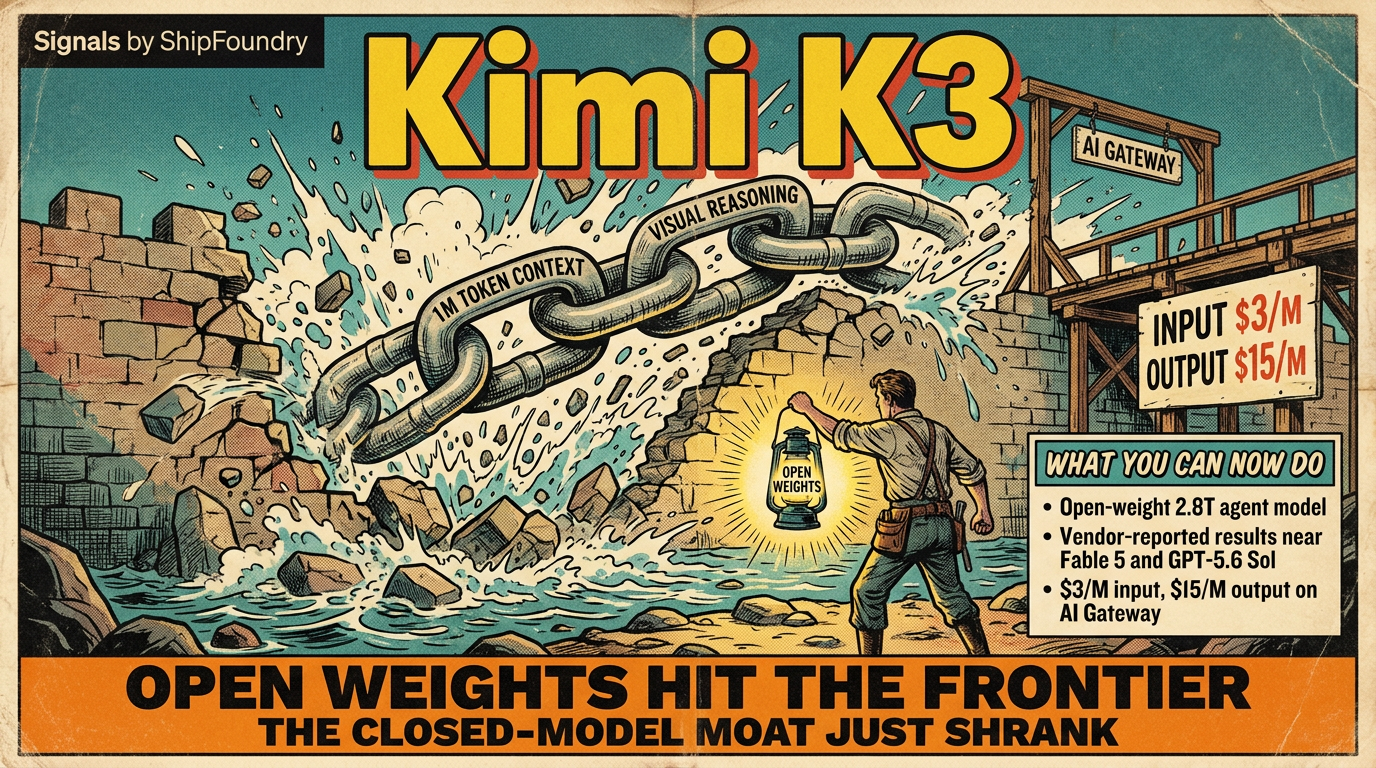
Kimi K3 Makes Frontier-Class Agent Intelligence Open-Weight
Moonshot released Kimi K3 as a 2.8T open-weight model for long-horizon coding, tool use, and knowledge work. Moonshot's own evaluations put it near Fable 5 and GPT-5.6 Sol on several agent benchmarks, while Vercel AI Gateway serves it for $3 per million input tokens and $15 per million output tokens.
Read The Signal
Jul 8, 2026
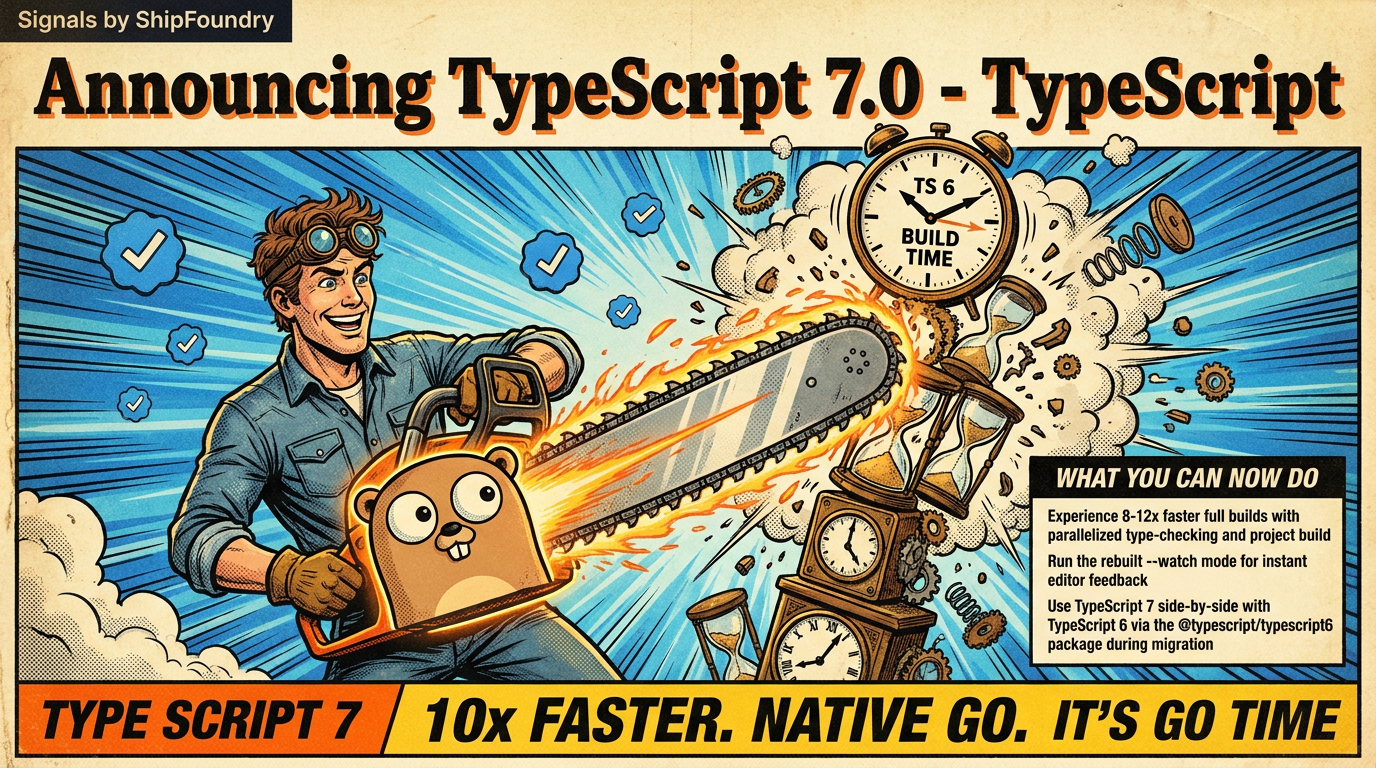
TypeScript 7 Ships: 10x Faster, but Maturity Has a Cost
TypeScript 7 is a native Go port delivering 8-12x faster builds and parallel type-checking. It is a real performance unlock for large codebases, but it has no API, ships with breaking defaults, and requires teams to migrate through 6.0 first.
Read The Signal
Jul 2, 2026
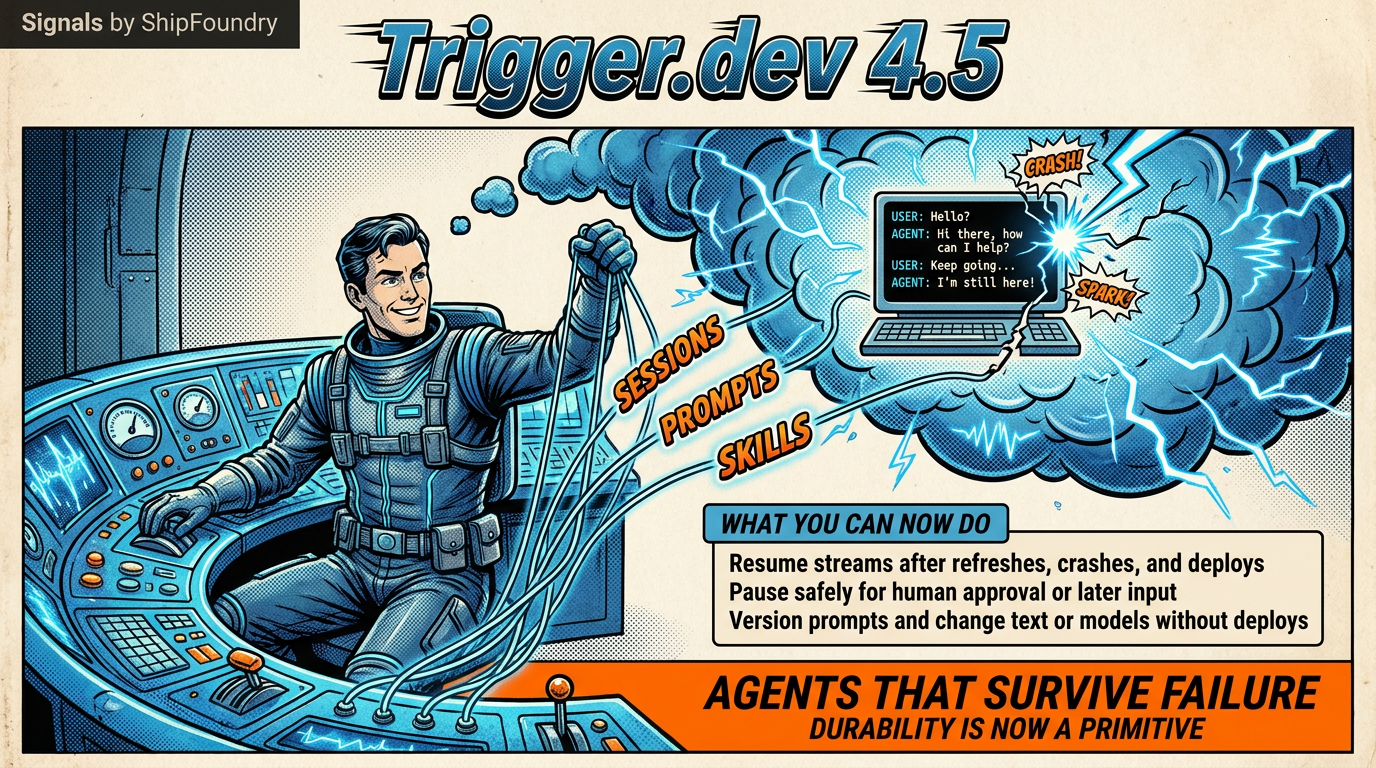
Trigger.dev 4.5 Makes Agent Conversations Survive Crashes and Redeploys
Trigger.dev turned fragile chat routes into durable agent runs. In 4.5, chat.agent, Sessions, and AI Prompts are generally available: conversations can reconnect after failures or deployments, wait safely for human approval, and use versioned prompts that teams can change without shipping code.
Read The Signal
From Signal To Advantage
Make Your Stack's Acceleration Your Advantage
ShipFoundry monitors the tools your product depends on, checks important updates against your stack and codebase, and surfaces the opportunities worth acting on, without you living in changelogs or X.