Signals
Supabase Gives Every Coding Agent Its Own Local Database
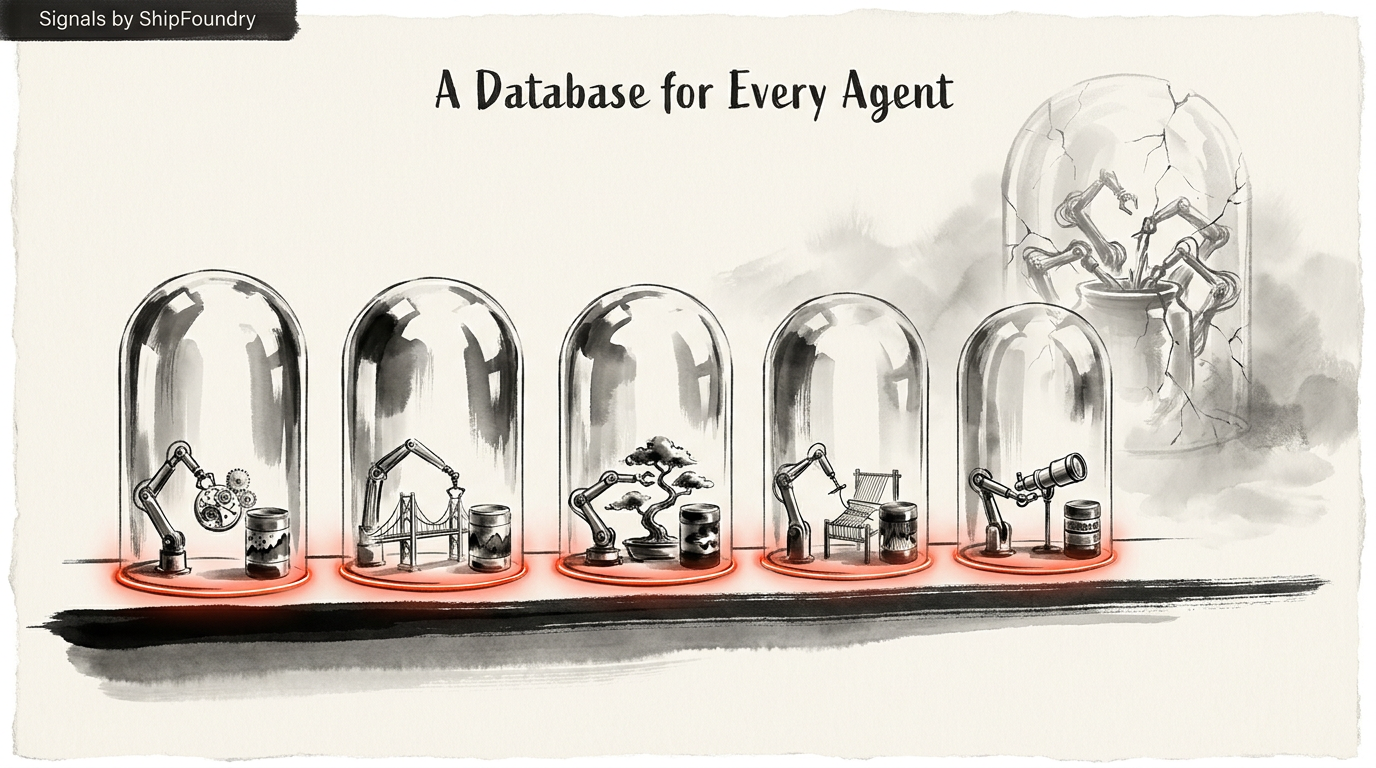
Parallel coding agents have always shared the one thing they could not safely share: the local database. Supabase CLI v2.119.0 gives every git worktree its own isolated local project with auto-assigned ports, plus a native runtime that skips Docker in CI and agent sandboxes. Experimental, but it removes the biggest collision point in multi-agent work.
What Changed
- Each git worktree can now run its own local Supabase project, with separate Postgres, Storage, and Edge Functions state.
- The CLI assigns and remembers ports per worktree, and `supabase start --output-format json` hands agents their URLs and keys.
- A native runtime (`supabase start --runtime native`) runs the local stack as plain processes with no Docker, on Linux (glibc 2.35+) and macOS 14+ on Apple silicon. It is designed for one project per sandbox or CI runner.
- Lazy startup boots Postgres first and wakes other services on demand. `--eager` restores full startup.
- Both features sit behind an experimental flag (`stack = true` under `[experimental]`), and their flags and output may change.
Who Should Care
- Teams running two or more coding agents in parallel worktrees against a Supabase app, who today serialize migrations, reset a shared local database, or juggle ports by hand.
- Anyone running agents in hosted sandboxes or CI runners where Docker is slow, unavailable, or locked down.
Who Should Not Care
- Solo workflows with one worktree and one local project.
- Teams that need several Supabase projects side by side on one laptop. Docker or Podman is still the better fit there.
- Teams that cannot absorb experimental flags and output that may change.
The Verdict
Turn it on for one parallel-agent workflow this week. Give each agent its own worktree and its own database, have agents read ports and keys from the JSON output, and let schema changes meet in code review instead of in a shared database. Keep Docker for multi-project laptops until this leaves experimental.
Take This To Your Agent
Copy a ready-to-paste investigation handoff that asks your coding agent to check this update against your product and recommend what to do next.