Signals
OpenAI Cut Luna's Price 80% Three Weeks After GPT-5.6 Shipped
Published July 29, 2026Update Released Jul 9, 2026
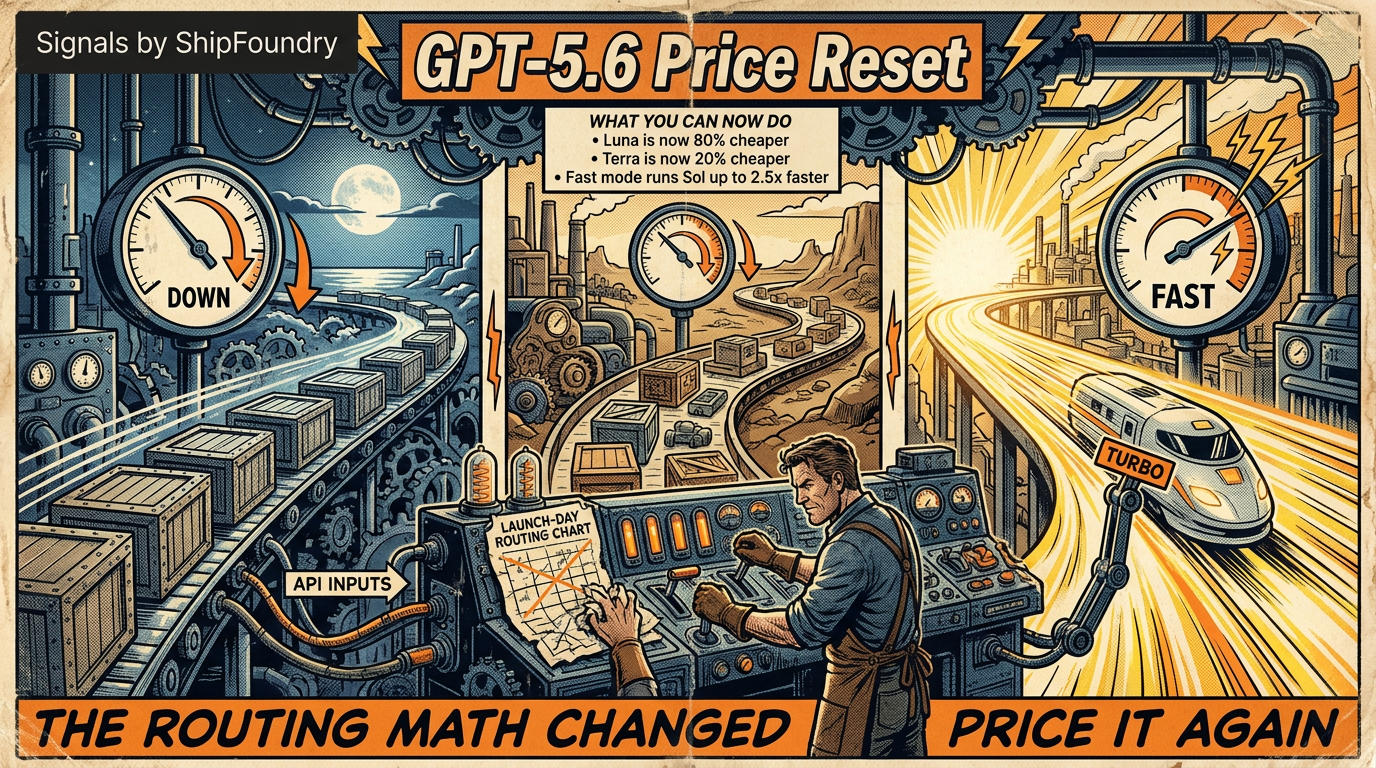
GPT-5.6 landed on July 9, but the bigger API story came July 30: OpenAI cut Luna's price 80%, cut Terra's price 20%, and replaced Priority Processing with Fast mode. Any routing or cost decision made at launch deserves a fresh look.
What Changed
- GPT-5.6 Sol, Terra, and Luna launched on July 9 across the Responses, Chat Completions, and Batch APIs.
- On July 30, Luna pricing fell 80% and Terra pricing fell 20%.
- Fast mode replaced Priority Processing. For GPT-5.6 Sol, it delivers up to 2.5x faster responses at twice the standard price.
- Existing requests tagged for priority processing automatically use Fast mode, so the transition is backward compatible.
Who Should Care
- Teams routing high-volume API workloads across model tiers or providers.
- Builders who chose Luna or Terra based on launch-day economics.
- Products where latency is valuable enough to pay for Sol Fast mode.
Who Should Not Care
- ChatGPT-only users who do not buy API tokens.
- Low-volume products whose model bill is too small to affect architecture.
- Teams that have not measured quality, latency, and total cost for their own workload.
The Verdict
This is a bigger builder signal than the launch headline. OpenAI changed the economics of its newest family only three weeks after release, enough to invalidate a recent routing decision. Re-run your own evals and cost model; do not assume the launch-day winner is still the right default.
Included In
July 2026 Signals: 8 Stack Changes Worth Your AttentionTake This To Your Agent
Copy a ready-to-paste investigation handoff that asks your coding agent to check this update against your product and recommend what to do next.